
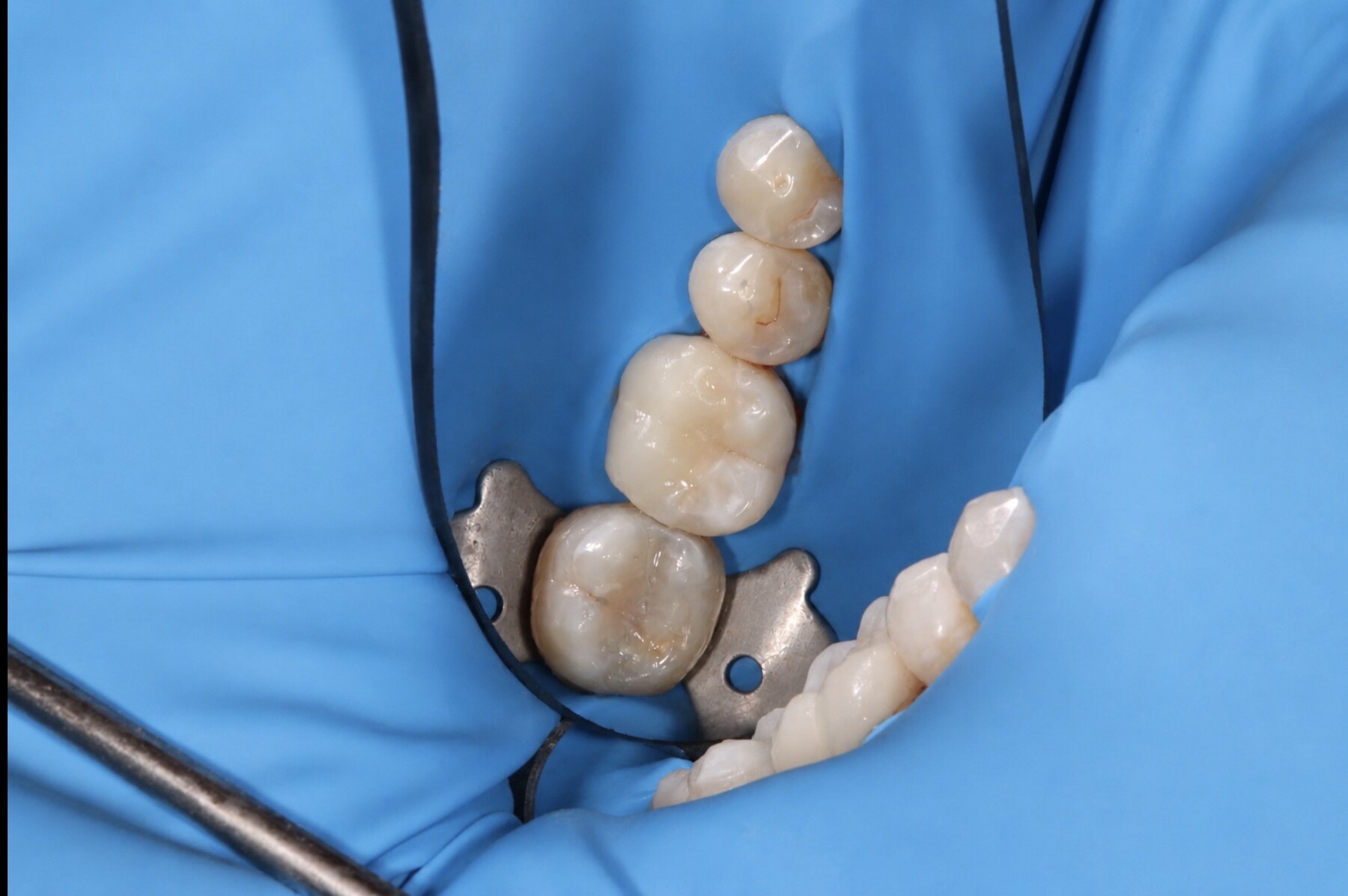
What is the difference?
An inlay mainly restores the inside of a tooth. An onlay also covers one or more weakened cusps. An overlay protects a larger surface when several cusps need coverage.
When are they used?
They may be considered when decay, fracture or an old restoration has weakened a back tooth but enough healthy structure remains.
The choice between composite and ceramic depends on the amount to rebuild, biting forces and the clinical situation.
Treatment steps
After conservative preparation, a digital or conventional impression is taken. The restoration is custom-made, tried in and bonded under isolation. The bite and finishing are then checked.
After treatment: caring for your restoration
If local anaesthetic was used, wait until the numbness has completely worn off before eating.
Mild sensitivity to cold, heat or biting may occur for a few days and should gradually settle. If the tooth feels higher than the others, discomfort when chewing persists or pain increases, contact the practice: a small bite adjustment may be all that is needed.
Brush normally with a soft toothbrush and fluoride toothpaste. Gently floss once a day, sliding the floss against each tooth surface without snapping it onto the gum. Regular reviews help us check the bond, contacts and bite.
Severe spontaneous pain, swelling, a fracture or a restoration coming loose requires prompt contact with the practice. Do not try to glue it back yourself; keep the restoration if you find it.